
Reducing AI bias in media with practical solutions
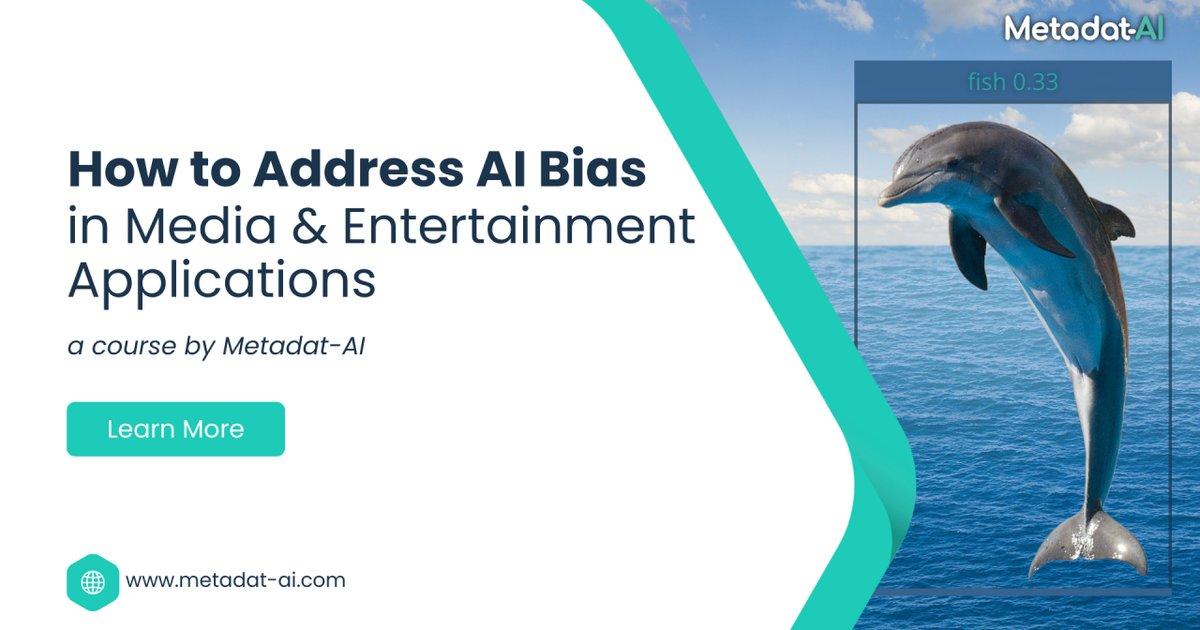
When flawed training data leads to unfair or inaccurate outputs, bias can disrupt everything from viewer recommendations to content moderation, eroding trust in media. Drawing from Metadat-AI’s Introduction to Artificial Intelligence course, this article explores how bias affects M&E, why ethical training matters, and how Metadat-AI’s secure, in-cloud solutions promote fairness. By understanding and addressing bias, media professionals can use AI responsibly to create better content and experiences.
What Is AI Bias and Why It Matters in Media
AI bias happens when the data used to train AI models contains imbalances or prejudices, leading to skewed results. Metadat-AI’s course explains that training data needs to be large, diverse, and high-quality to avoid bias. If the data is narrow or unrepresentative, AI can make mistakes—like misidentifying faces, prioritizing certain content, or flagging innocent material as problematic. In M&E, these errors have real consequences. For example, biased recommendation algorithms might only suggest action movies to viewers, ignoring their interest in dramas, which frustrates users and reduces engagement. Similarly, biased content moderation could unfairly censor certain creators, damaging a platform’s reputation.
Bias often stems from the data’s source. If an AI model is trained on video clips mostly featuring one demographic, it might struggle to recognize others, leading to inaccurate tagging or search results. Metadat-AI’s course highlights that quality data—clear, relevant, and varied—is key to fair outcomes. For instance, a model trained on diverse audio samples can better detect offensive language across accents and contexts, a critical task in M&E. Without this diversity, AI risks producing outputs that favor one group or miss the mark entirely.
The stakes are high in media, where trust and fairness are everything. A streaming platform with biased recommendations loses viewers. A broadcaster with flawed moderation faces backlash. These issues aren’t just technical—they affect audience loyalty and brand credibility. Metadat-AI tackles this by prioritizing ethical AI, using secure in-cloud systems to train models transparently. Their approach ensures tools like offensive language detection work fairly, helping media businesses build trust with audiences.
How Bias Shows Up in Media Applications
To understand AI bias in M&E, let’s look at real-world examples. Recommendation systems, like those used by Netflix or Spotify, are a common case. Metadat-AI’s course notes that Netflix uses AI to suggest shows based on viewing history. If the training data overrepresents certain genres or demographics, the AI might push those exclusively, alienating viewers with broader tastes. For example, a viewer who enjoys both sci-fi and rom-coms might only see sci-fi suggestions, missing out on half their interests. This not only frustrates users but also limits the platform’s ability to showcase diverse content.
Another example is content moderation, such as detecting offensive language in user-generated videos. Metadat-AI’s tools excel here, scanning posts for problematic content to ensure compliance. But if the training data lacks variety—say, it’s mostly English from one region—the AI might miss slang or cultural nuances in other dialects, leading to false positives or negatives. A biased model could flag harmless phrases as offensive or let harmful ones slip through, creating legal or PR issues for broadcasters. Diverse training data, as Metadat-AI emphasizes, helps avoid these pitfalls by teaching AI to understand context better.
Media asset management (MAM) is another area where bias can creep in. Studios rely on AI to tag and organize footage, making it easy to find specific clips. If the training data is skewed—say, mostly daytime scenes—the AI might struggle to tag nighttime footage accurately, slowing down production. Metadat-AI’s course highlights their MAM tools, which use carefully curated data to identify assets, detect duplicates, and flag compliance issues. By training models on diverse datasets, they ensure AI performs reliably across different content types.
These examples show how bias can disrupt media workflows, from viewer experience to operational efficiency. Like an editor who only reads one genre, biased AI misses the full story. Metadat-AI’s ethical training practices help media businesses avoid these issues, delivering fair and accurate results.
The Role of Ethical Training in Reducing Bias
Reducing AI bias starts with how models are trained. Metadat-AI’s course outlines training methods like supervised learning, where AI learns from labeled data, and unsupervised learning, which finds patterns in unlabeled data. For M&E tasks like offensive language detection, supervised learning is common, using datasets of flagged and safe content. But if the dataset is unbalanced—say, it includes more examples from one culture—the AI might misjudge other contexts. Metadat-AI tackles this by using diverse, high-quality data, ensuring models understand varied languages, accents, and cultural norms.
Transparency is another key factor. Metadat-AI’s in-cloud systems allow businesses to see how data is processed and models are trained, building trust. Unlike black-box AI, where the inner workings are hidden, their approach lets media companies verify that training data is fair and compliant with regulations like the EU AI Act. This is crucial for tasks like compliance flagging, where errors can lead to legal trouble. By prioritizing transparency, Metadat-AI ensures AI outputs are both accurate and ethical.
Quality control also matters. Metadat-AI’s course stresses that training data must be clear and relevant. For example, to detect logos in videos for copyright compliance, the AI needs examples of logos in different lighting, angles, and contexts. Poor-quality data—like blurry images—can confuse the model, leading to missed detections. Metadat-AI’s tools use carefully curated datasets, often pre-trained for M&E tasks, to deliver reliable results. This saves businesses from costly retraining and ensures fairness from the start.
Ethical training isn’t just about data—it’s about intent. Metadat-AI designs their AI to serve media businesses responsibly, avoiding shortcuts that could introduce bias. Their in-cloud platform supports this by keeping data secure and processes auditable, so companies can trust the AI’s decisions. This commitment to fairness makes Metadat-AI a go-to partner for M&E professionals looking to use AI without compromising values.
Metadat-AI’s Approach to Fair AI in Media
Metadat-AI doesn’t just talk about bias—they build solutions to address it. Their in-cloud AI tools are tailored for M&E, handling tasks like offensive language detection, logo identification, and asset management with fairness in mind. For example, their compliance flagging tool scans videos for problematic content, using diverse training data to catch issues across contexts. This helps broadcasters avoid legal risks while keeping moderation fair. Similarly, their MAM tools tag and organize assets accurately, even for diverse content types, thanks to balanced datasets.
Security is a big part of their approach. Media companies deal with sensitive content, and Metadat-AI’s cloud-based systems ensure data stays protected during training and use. This is especially important for ethical AI, as it prevents unauthorized access that could skew models. Their transparent processes let businesses audit training data, ensuring compliance with regulations and internal standards. This level of trust is rare in AI, making Metadat-AI a standout choice for media.
Their Introduction to Artificial Intelligence course ties it all together. Led by CEO Damon Neale, the course teaches M&E professionals how to spot and address bias in AI applications. It covers training data challenges, ethical considerations, and real-world examples like Netflix’s recommendation systems. The course’s approachable style makes complex ideas easy to understand, empowering teams to use AI responsibly. By sharing this knowledge, Metadat-AI helps media businesses build fairer, more effective workflows.
Why Education Is Key to Ethical AI
Addressing AI bias requires more than technology—it takes understanding. That’s where Metadat-AI’s course shines. Designed for media professionals, it explains how bias happens, how to fix it, and how to apply AI ethically. The course uses clear examples, like the risks of biased recommendations or moderation errors, to show why data diversity matters. It also covers practical steps, like choosing quality datasets and auditing models, to ensure fairness.
The course’s tone is friendly yet expert, reflecting Metadat-AI’s commitment to making AI accessible. Damon Neale’s experience in media and AI brings real-world insights, from Disney’s use of AI for audience analysis to IBM’s automated trailer editing. These case studies show how ethical AI can improve efficiency and trust, helping businesses justify investments. The course also tackles legal issues, like training data licensing, ensuring teams stay compliant.
By taking the course, media professionals learn to use AI like a fair-minded editor—checking for bias and balancing perspectives. It’s not just about avoiding errors; it’s about creating content and experiences that resonate with diverse audiences. Metadat-AI’s tools, showcased in the course, make this easier with pre-trained models and transparent systems. Whether you’re a small studio or a global streamer, the course equips you to use AI fairly and effectively.
Tips for Media Professionals to Combat AI Bias
Fighting AI bias starts with practical steps. First, prioritize diverse data. For tasks like content moderation, use datasets that cover different languages, cultures, and contexts. Metadat-AI’s course suggests sourcing data from varied regions to avoid blind spots. If you’re working with vendors, ask about their data practices to ensure fairness.
Second, test and monitor AI outputs. Regularly check for errors, like mislabeled assets or unfair recommendations, and retrain models as needed. Metadat-AI’s transparent systems make this easier by letting you audit data and processes. Testing ensures AI stays accurate as content evolves.
Third, train your team. AI literacy helps staff spot bias and use tools effectively. Metadat-AI’s course is a great starting point, offering clear lessons and hands-on examples. An informed team can make better decisions, from selecting models to setting KPIs.
Finally, choose ethical AI providers. Metadat-AI’s in-cloud tools and transparent training set a high standard, ensuring fairness and security. Partnering with providers who value ethics reduces bias risks and builds trust with audiences.
Looking Ahead: Building Trust with Ethical AI
AI is a powerful tool for M&E, but bias can undermine its benefits. Like an editor refining a draft, media professionals must check AI for fairness to create content that resonates. Metadat-AI leads the way with ethical training, secure systems, and practical tools for tasks like compliance and asset management. Their Introduction to Artificial Intelligence course empowers teams to use AI responsibly, offering insights into bias, training, and real-world applications.
By learning to address bias, media businesses can build trust with audiences and streamline operations. Metadat-AI’s course and tools make this possible, combining expertise with accessibility. Ready to make AI a fair-minded partner in your media projects? Visit Metadat-AI.com to explore the course and see how their solutions can help. With the right approach, AI can tell stories that connect and inspire, free from bias.
Related
responsible-aitraining-data